
Many organizations use a combination of tools and processes to identify incorrect settings in software-as-a-service accounts, control who can access which resources, and detect when sensitive information may be exposed. This approach brings together automated scanning, inventory of SaaS applications, and policy rules that compare current settings against desired configurations. The goal is to reduce the likelihood that a misconfigured option, excessive privilege, or unlabelled dataset leads to unintended access or disclosure.
These systems often integrate with identity providers, cloud directories, and SaaS provider APIs to collect configuration and access telemetry. They may flag deviations from defined policies, map user roles to privileges, and surface where data appears in public or poorly protected locations. Outputs typically include prioritized findings, contextual evidence, and recommended remediation steps framed as considerations rather than absolute fixes.
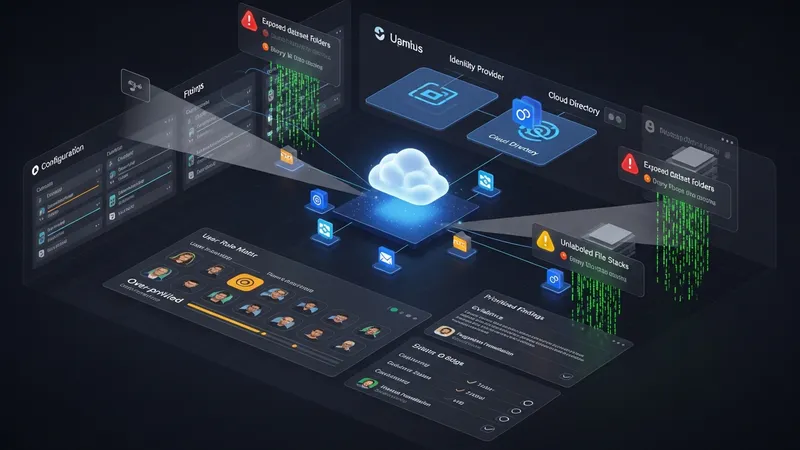
Detection of misconfigurations may rely on periodic scans and real-time event ingestion. Scans often compare live settings to a baseline policy and may assign severity levels to findings. In practice, scan frequency and depth can vary by organization size and change rate; some teams may run daily checks while others perform ad-hoc audits after deployments. Consideration should be given to maintenance windows and API rate limits, which can affect how comprehensive automated checks can be.
Access control work typically centers on mapping identities to privileges and reducing privilege sprawl. Approaches may include periodic entitlement reviews, use of roles with least-privilege intent, and temporary elevation mechanisms for specific tasks. Identity lifecycle processes — provisioning, modification, deprovisioning — often determine how long excessive access persists. It is useful to treat entitlement data as a living dataset that can be analyzed for anomalous growth or stale permissions.
Monitoring data exposure requires combining metadata analysis with content-aware techniques. Metadata signals such as bucket ACLs, link-sharing settings, or third-party integrations can indicate potential exposure, while content scanning may identify specific sensitive fields. Many organizations align exposure checks with data classification schemes so that high-impact data receives more frequent or stricter controls. Resource constraints and privacy considerations may limit how deeply content is inspected.
Policy enforcement and continuous security monitoring typically tie detection to remediation workflows. Policies may be enforced through automated configuration changes, workflow tickets for human review, or conditional access adjustments. Prioritization commonly depends on the sensitivity of affected assets, user risk context, and the potential for lateral access. Effective monitoring may integrate telemetry across SaaS apps, identity platforms, and endpoint signals to improve context for each finding.
In summary, the combined practices of scanning for misconfigurations, refining access controls, and monitoring data exposure form a coordinated approach to reducing risk in SaaS environments. These components may be implemented using a mix of platform capabilities and organizational processes, and they often evolve as application portfolios and user behavior change. The next sections examine practical components and considerations in more detail.
Detecting configuration issues begins with inventorying connected SaaS applications and their settings. Inventory processes may use provider APIs or service account credentials to list enabled features, sharing settings, and security controls. Common indicators of concern include public sharing options enabled on storage, single-factor authentication on sensitive apps, and administrative roles assigned to service accounts. Organizations may categorize findings by impact and likelihood so that limited resources focus on the most consequential misconfigurations. Consider API rate limits and permission scopes when planning scan cadence, as these technical limits can influence what can be detected automatically.
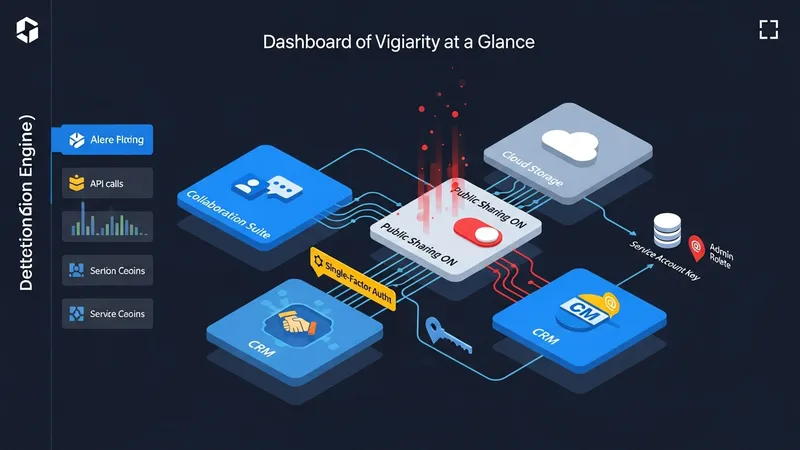
Different SaaS platforms expose different configuration surfaces, so detection rules often need tailoring. For example, collaboration suites may have many sharing and link options to evaluate, while CRM systems may require checks on API token usage and field-level encryption. Detection engines that interpret provider-specific APIs can map disparate settings into a consistent policy model, which can help teams compare posture across multiple applications. Maintaining mapping logic may require periodic updates as vendors change APIs or add features.
Management of identified issues can follow several models: automated correction, human-reviewed remediation, or staged fixes with rollback options. Automated corrections may address low-risk misconfigurations such as disabling anonymous sharing, while higher-risk changes commonly go through review workflows. Integrations with ticketing systems, identity platforms, and configuration management tools can help ensure that remediation actions are documented and auditable. Teams should also plan for verification scans after remediation to confirm changes persist.
Operational considerations include scan performance, false positive rates, and the effort required to validate findings. Many teams adopt tuning cycles where detection rules are refined to reduce noise and focus on patterns that historically preceded incidents. It may be useful to correlate configuration findings with access logs; a permissive setting that has not been used could be ranked lower than a permissive setting that has generated frequent external links or API calls. These correlations can help prioritize limited remediation bandwidth.
Access control work often centers on mapping identities to roles and managing the lifecycle of those mappings. Identity governance practices such as periodic access reviews, role definition, and proof of need for elevated privileges can reduce the time that excessive rights remain active. Automated enrollment and deprovisioning tied to HR or directory events typically reduce orphaned accounts. Organizations may also implement time-limited elevation for specific tasks, which can limit permanent privilege increases and make audits more straightforward.
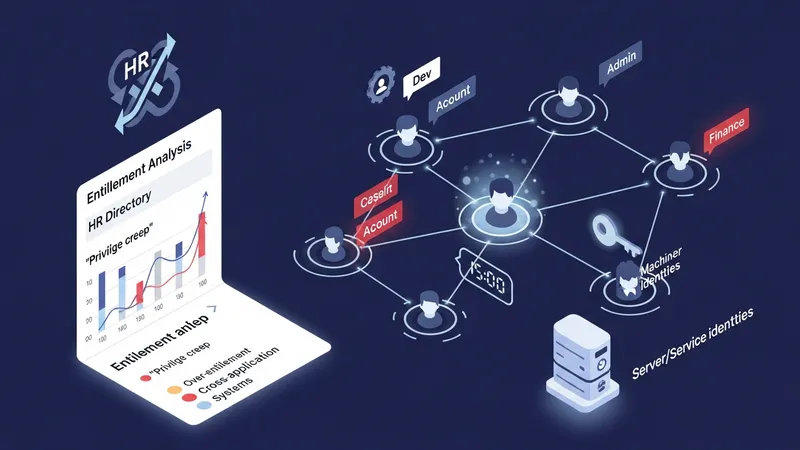
Entitlement analysis can reveal privilege creep over time, where users accumulate access through role changes or ad hoc requests. Analytical tools that track entitlement growth and flag accounts with many cross-application privileges may help teams plan remediation. Aligning role definitions to job functions and using attribute-based access controls where available can reduce the need to manage many ad hoc permission assignments. Consideration should be given to service and machine identities, which often hold long-lived credentials and may require separate rotation and monitoring processes.
Integrations with identity providers and single sign-on (SSO) systems are common to centralize control and monitoring. SSO centralization can simplify multi-factor authentication deployment and provide consistent session controls across applications. However, centralization can also create central points of failure or compromise, so redundancy and strong protection of identity credentials are important considerations. Monitoring authentication anomalies such as unusual geolocations or device changes can add context to access-related alerts.
Governance programs typically balance automation and human review. Automated policy enforcement can address routine tasks, while human reviewers adjudicate complex entitlement requests and risk exceptions. Recordkeeping of reviews and decisions helps demonstrate control continuity for audits and compliance checks. Periodic sampling and trend analysis may show whether governance actions are reducing excessive access over time, allowing organizations to adjust scope or frequency of governance activities.
Data exposure monitoring combines signal collection with classification to identify where sensitive information may be at risk. Signals include publicly shared links, permissive API tokens, misconfigured storage, and third-party app permissions. Classification may use metadata, file labeling, or content inspection to determine sensitivity. By tagging data assets, teams can prioritize monitoring and remediation — for example, applying tighter sharing restrictions and more frequent scans to high-sensitivity categories. Privacy and legal constraints may affect how deep content inspection can go, so organizations should align monitoring with applicable policies and regulations.
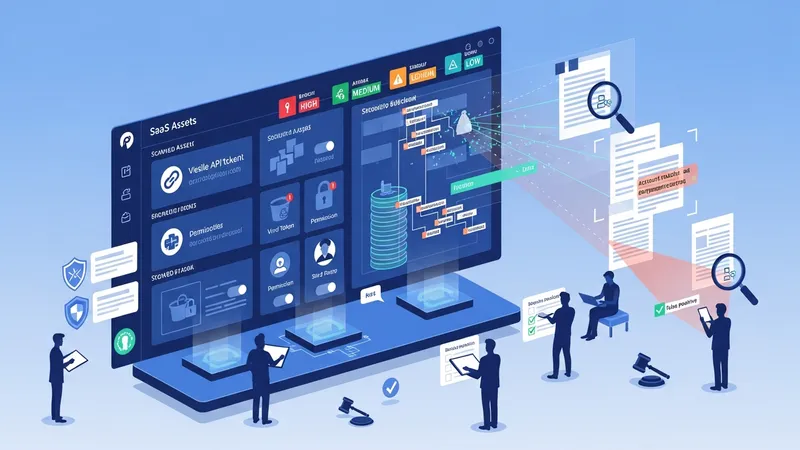
Techniques for detecting exposure vary by platform and data type. For structured data in SaaS databases, schema analysis and field-level sensitivity tagging can help. For unstructured content such as documents, pattern matching and machine learning models often assist in locating potential sensitive fields like account identifiers or payment-related strings. False positives are a common issue with content scanning, so many programs incorporate sampling and manual validation to refine detection rules and reduce noise.
Monitoring should also consider data movement via integrations and API access. Third-party connectors that copy or sync data to external services can create exposure paths that are not visible through standard sharing controls. Logging API client IDs and reviewing third-party integration scopes can reveal where data leaves the primary SaaS environment. Periodic reviews of connected applications and their granted scopes may uncover stale or over-privileged integrations.
Remediation options for detected exposures typically range from adjusting sharing settings to revoking third-party access and rotating exposed credentials. Organizations may implement staged containment: disable public links, revoke connectors, then perform deeper audits if sensitive content is confirmed. Tracking the lineage of exposed data — when it was created, who accessed it, and where it was shared — can support incident response and compliance reporting. These lineage traces often rely on consistent metadata capture at creation time.
Policy enforcement tools translate organizational rules into automated checks and actions. Policies can be rule-based (e.g., disallow public sharing on storage) or risk-based (e.g., escalate when high-sensitivity data is both shared externally and accessed by new devices). Enforcement may occur at discovery time, during configuration drift detection, or through conditional access gates. Organizations often combine preventive blocks for high-risk conditions with detective controls that notify teams for lower-risk deviations. Clear documentation of policy intent and expected outcomes helps align technical enforcement with business needs.
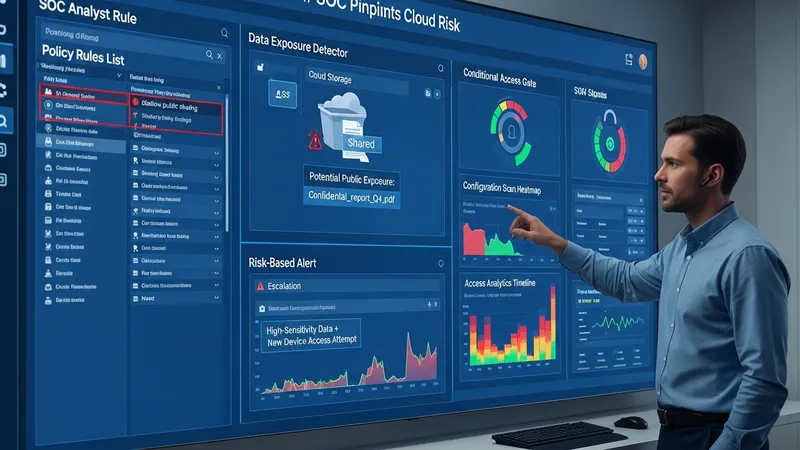
Risk visibility combines findings from configuration scans, access analytics, and data exposure detection into dashboards and reports that can be consumed by security, compliance, and application owners. Effective visibility typically includes contextual details such as user identity, device posture, time of change, and associated risk scores. This context can help decision-makers prioritize actions and understand whether observed issues are transient or systemic. Periodic reporting on trends may indicate whether control adjustments lead to measurable posture improvements.
Continuous monitoring aims to maintain an up-to-date picture of SaaS risk as applications and user behavior change. Continuous approaches may integrate event streams, such as audit logs and activity events, with scheduled posture assessments. Organizations that monitor continuously can detect rapid shifts in exposure following configuration changes or third-party integration additions. Planning for scale is important, as large application portfolios can generate high event volumes; filtering and enrichment help focus attention on meaningful signals.
Operational considerations include integration complexity, alert fatigue, and the governance model for handling findings. Teams often define service levels for triage and remediation based on asset sensitivity and business impact. Cross-team coordination between cloud operations, identity teams, and application owners can reduce friction when enforcing policies or correcting misconfigurations. Ongoing tuning and retrospective reviews help align monitoring and enforcement with evolving application architectures and threat patterns.