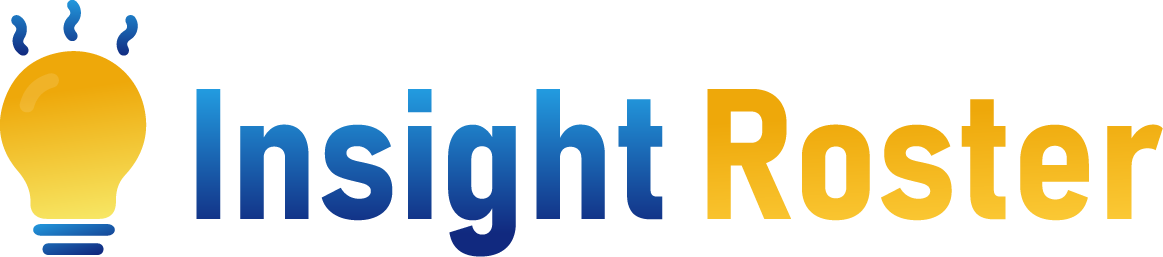
Employee monitoring software refers to a class of administrative tools that collect and present data about how digital workplace resources are used. These systems typically record time spent on tasks, application and website use, attendance and clock-in events, and activity logs generated by endpoints or cloud services. The aggregated data is then displayed through dashboards and reports to support operational oversight, resource planning, and policy compliance. The concept focuses on observable workplace actions rather than personal or medical information, and implementations can vary according to organizational scale and technical environment.
Implementations of employee monitoring software often combine several functions in a single suite or as integrated modules. Core functions commonly include automated time tracking, screenshot or activity sampling, application and website categorization, keystroke or idle detection for productivity context, and configurable reporting. Administrative features may include role-based access to data, data retention settings, and exportable reports for auditors or managers. Such tools may be deployed on desktops, mobile devices, virtual desktops, or via network-level monitoring depending on organizational needs and infrastructure.
Time-tracking and activity logging may record active application focus, window titles, and elapsed session time to create a timeline of work. These records can be coarse-grained (session-level totals) or fine-grained (detailed timestamps and interaction metrics). The level of granularity often depends on configuration choices and legal or policy constraints; organizations commonly balance the desire for operational detail against privacy and storage considerations. Integration with payroll or scheduling systems is a frequent administrative use case, though such integrations typically require planning around data formats and retention policies.
Application and website usage monitoring often relies on categorization frameworks that map application names or URLs to functional groups such as “communication,” “development,” or “entertainment.” These categorizations may be predefined or customizable, and they can support aggregated reporting across teams or departments. Data from app/website monitoring can be used for capacity planning, identifying training needs, and understanding tool adoption patterns. However, analysts often treat such metrics as indicators rather than definitive measures of individual performance.
Productivity reporting and dashboards commonly present several derived metrics such as active time, idle time, focus intervals, and most-used tools. Visualizations may include timelines, heat maps, and distribution charts that surface usage patterns over days or weeks. These outputs typically inform operational decisions like staffing, shift planning, and software licensing allocation. It is common for organizations to pair quantitative monitoring outputs with qualitative inputs, such as manager observations or employee self-reports, to produce a more complete contextual picture.
Attendance monitoring and schedule reconciliation features can provide automated clock-in/out, break tracking, and exception reporting for absences or late starts. These modules often support configurable thresholds and alerts so administrators can identify anomalies without constant manual review. When combined with access control or badge systems, attendance data may be cross-referenced to verify physical presence where relevant. Such combinations may be helpful for compliance with labor regulations when organizations configure policies in line with applicable rules.
In summary, employee monitoring software encompasses a set of functions that may include time tracking, application and website monitoring, reporting dashboards, and compliance-oriented features. Organizations often adopt combinations of these capabilities to address operational oversight, resource planning, and regulatory needs while considering privacy, transparency, and technical constraints. The next sections examine practical components and considerations in more detail.
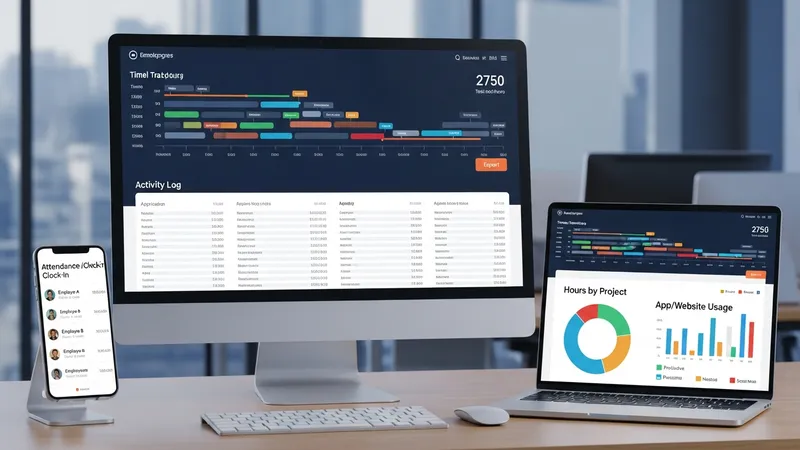
Feature categories in employee monitoring systems usually map to distinct technical approaches: endpoint agents, network monitoring, cloud service integrations, and manual input. Endpoint agents run on user devices and can capture detailed application focus, process names, and local activity, while network monitoring inspects traffic patterns and destination domains at an infrastructure level. Cloud integrations may collect activity logs from collaboration platforms and email services. Manual input options like timesheets remain part of many deployments to capture work that occurs off-device. Each approach may offer different fidelity, deployment complexity, and privacy implications.
Endpoint agents can provide granular timelines and interaction data but may raise higher administrative overhead for deployment and updates across diverse device fleets. Network-based approaches often capture cross-device patterns without installing software on each endpoint, though they may miss activities on encrypted channels or personal devices. Cloud integrations are increasingly common as remote work uses web-based collaboration tools; APIs from major platforms can supply audit logs or usage metrics. When selecting approaches, organizations often weigh coverage, data granularity, and maintainability rather than assuming a single solution covers all needs.
Data processing and storage architectures for monitoring systems typically involve local buffering, centralized ingestion, and indexed storage for querying. Some deployments process data on-premises to align with internal policies, while others use hosted analytics platforms that may simplify scaling and dashboarding. Data retention settings, anonymization options, and role-based access controls are common administrative safeguards. Architects often design retention and access policies to balance operational analytics needs with privacy obligations and storage cost considerations.
Interoperability with existing IT systems is frequently an important practical consideration. Common integrations include single sign-on, human resources information systems (HRIS), payroll platforms, and ticketing systems. These integrations can streamline workflows like time-off reconciliation or access revocations, but they may require mapping fields and aligning update frequencies. As an operational detail, organizations may prototype integrations with limited teams to validate data flows before broader rollout, which can reduce unforeseen workload and alignment issues.
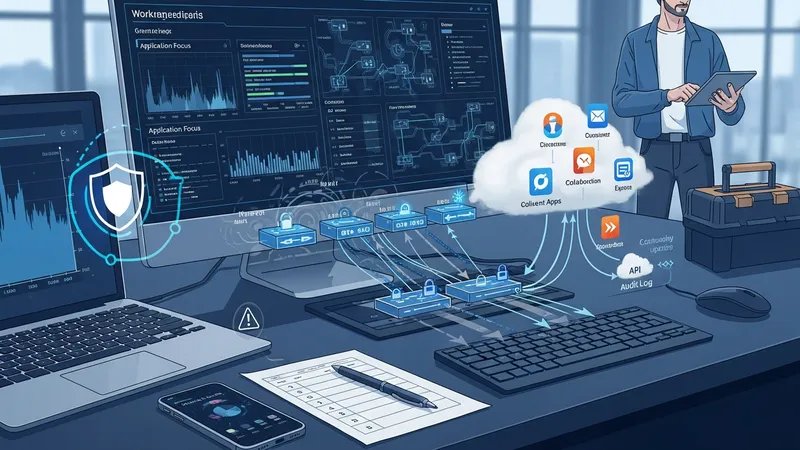
Reporting and dashboarding components transform raw activity logs into interpretable summaries such as weekly usage trends, busiest application categories, and exception lists for attendance. Dashboards often allow filtering by team, project, or time period and may support scheduled exports for review. Administrative functions typically include role-based permissions for who can view or export data, audit trails for report access, and configurable alerting thresholds. These features may help operational staff detect capacity bottlenecks or unusual patterns that warrant further investigation.
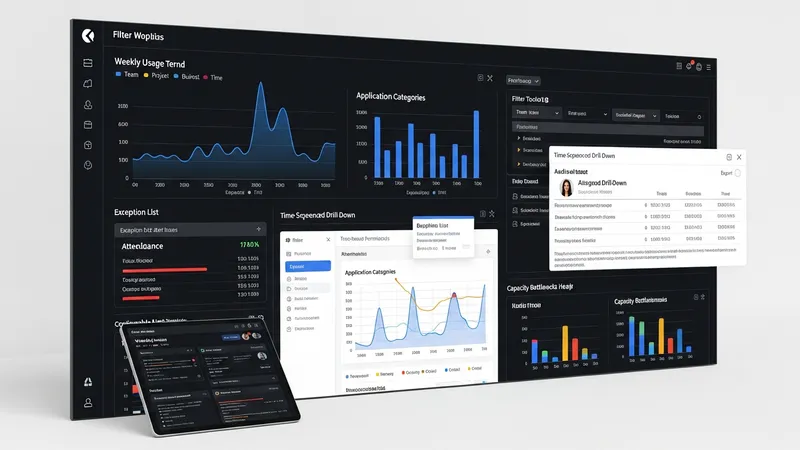
Design choices for dashboards commonly focus on clarity and contextualization rather than exhaustive detail. Effective dashboards may provide both high-level summaries and the ability to drill into time-sequenced records when necessary. Administrators often configure templates for recurring reports to ensure consistency across review cycles. It is typical for organizations to supplement automated reports with narrative context from managers or project leads to reduce misinterpretation of quantitative indicators.
Export and archival capabilities are practical administrative features for compliance and audit readiness. Monitoring platforms may support CSV, JSON, or PDF exports and configurable archival policies that govern how long raw logs are retained. Retention durations are often aligned with internal policies or regulatory requirements and may vary across data types (for example, event logs versus summarized metrics). When planning retention, organizations commonly balance forensic utility against storage costs and privacy considerations.
Access control and governance are recurring administrative considerations. Systems usually allow administrators to define roles such as analyst, manager, or auditor, each with tailored viewing permissions. Logging of administrative actions—who accessed which reports and when—can support internal governance and accountability. A practical tip is to periodically review access lists and retention settings to ensure they remain aligned with evolving organizational roles and regulatory expectations.
Employee monitoring systems are often applied in contexts such as remote and hybrid work oversight, regulated environments requiring audit trails, resource allocation for software licensing, and security incident investigations. In remote work scenarios, such systems may help managers understand tool adoption and time allocation across distributed teams. In regulated sectors, monitoring may provide evidence of process adherence or access to sensitive systems. Organizations typically frame these use cases in terms of operational visibility rather than performance judgment to preserve balanced interpretations.
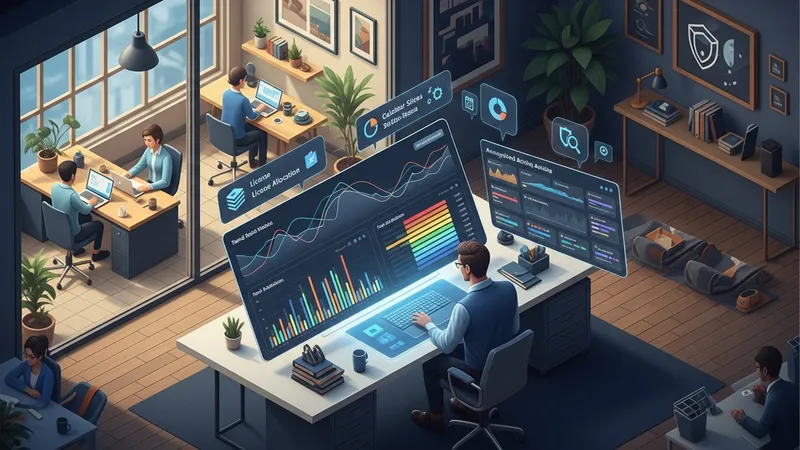
For resource planning, usage metrics from monitoring systems can inform capacity decisions such as replicating popular tool configurations or reallocating licenses from underused software. IT and procurement teams may use aggregated reports to justify renewals or reallocations; these actions typically rely on trend data rather than isolated events. In security contexts, activity logs may supplement other telemetry to trace lateral movement or data exfiltration attempts, serving as one of multiple investigative inputs rather than the sole source of truth.
Monitoring tools may also support compliance workflows by providing timestamped records of access, file transfers, or policy-related events. Organizations often align monitoring outputs with internal policies and external audit requirements so that records can be presented during reviews. It is common practice to document monitoring scope and data handling procedures in internal policies so stakeholders understand what is collected, why, and how it is used. Such documentation can reduce uncertainty and support consistent application of rules.
Operational adoption frequently follows a staged approach where a pilot deployment assesses data relevance and policy fit before broader rollout. Pilots often involve a representative sample of teams and focus on validating data accuracy, dashboard usability, and integration points. This approach may reveal unexpected technical constraints or cultural concerns that can be addressed iteratively. Readers may find it informative to consider pilots as a way to reconcile operational requirements with privacy and governance constraints.
Privacy and legal frameworks relevant to employee monitoring vary by jurisdiction and organizational context; universally, they require careful alignment between data collection practices and declared policies. Common considerations include notifying affected individuals about monitoring scope, minimizing collection to what is necessary for stated purposes, and safeguarding sensitive personal information. Organizations often consult legal advisors to interpret applicable labor and data protection laws and to design transparency measures such as written policies or regular disclosures.
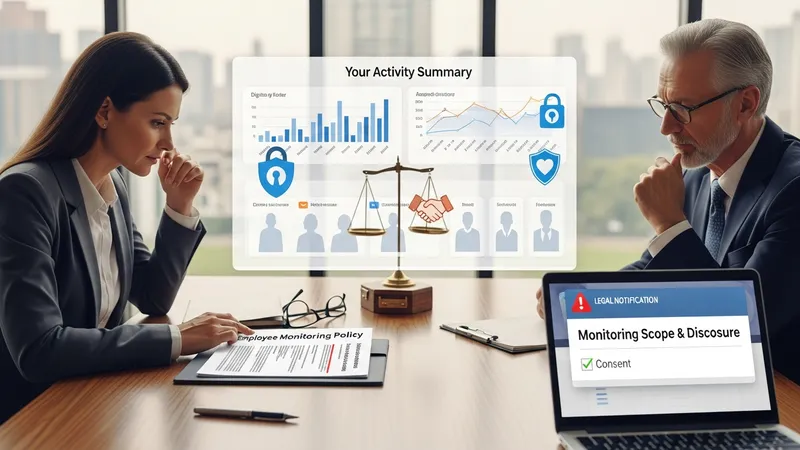
Ethical considerations extend beyond legal compliance to encompass trust and workplace culture. Monitoring that is perceived as overly intrusive may affect morale and information sharing. Many organizations choose mitigation measures such as anonymizing aggregated reports, providing employees with access to their own activity summaries, or establishing clear limits on how monitoring data may be used in performance evaluations. Such mitigations are typically described in internal policies to support fair application.
Technical safeguards that commonly accompany privacy measures include data minimization, access controls, and encryption for data in transit and at rest. Retention schedules and periodic audits of data access help reduce the risk of unnecessary exposure. It is typical for security and privacy teams to collaborate on configuration choices so that monitoring supports operational aims while limiting collateral privacy implications.
When planning monitoring programs, organizations often document selection criteria, intended use cases, and oversight mechanisms. Transparent governance frameworks may include periodic reviews of data practices, stakeholder consultations, and clear channels for employees to raise concerns. These practices can help align monitoring activities with both compliance obligations and organizational values, supporting more sustainable operational use of monitoring technologies.