
Security posture management for software-as-a-service (SaaS) environments refers to methods and tools that gather configuration, identity, and usage data from cloud-hosted applications to produce a coherent view of security risk. In plain terms, this concept involves continuously discovering SaaS instances in use, assessing their configuration against defined settings, and mapping who has access to which data and features. The goal is to reduce misconfigurations, surface risky permission assignments, and provide operators with information to prioritize remediation. When discussed in a Microsoft context, these activities often tie into Microsoft cloud tooling and identity systems while remaining compatible with third-party SaaS services.
At an operational level, SaaS security posture management commonly combines automated scans, API integrations, and policy checks. Scans may examine application configuration (for example, sharing settings or enabled integrations), identity mappings (roles, groups, or external collaborators), and telemetry (suspicious sign-in patterns or anomalous app activity). Results are typically presented as prioritized findings or posture scores that indicate where configuration drift or risky exposures exist. These systems often integrate with broader security operations workflows so that identified issues can be tracked, investigated, and, where appropriate, remediated.
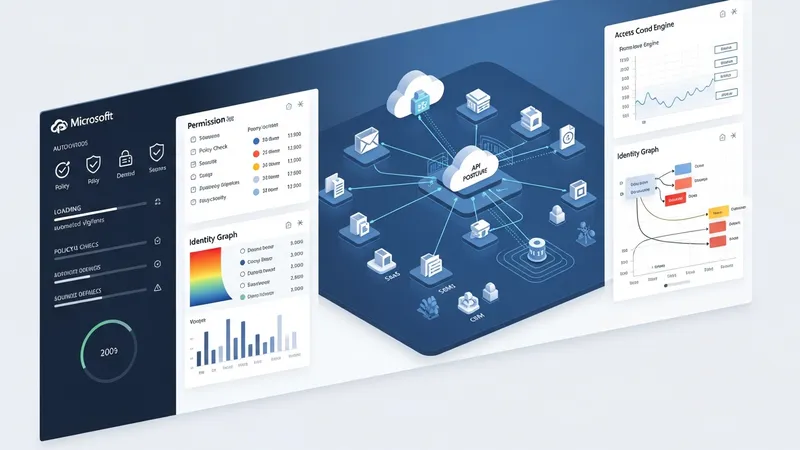
Automated connectors and APIs are central to many SaaS posture assessments. Connectors may use read-only APIs to enumerate configuration and permissions, and they typically respect the vendor’s authorization model. In Microsoft-related implementations, connectors can ingest telemetry from Microsoft cloud services and merge that with app-level configuration data. Analysts often treat connector coverage and API rate limits as practical constraints: some settings may not be exposed via APIs, and continuous collection can be paced to avoid hitting service limits. These practical constraints can affect the frequency of assessment and the granularity of findings.
Scoring and prioritization models commonly apply rules to raw findings so that teams can focus on higher-risk items first. A posture score may combine factors such as the sensitivity of exposed data, the breadth of privileged access, and evidence of anomalous activity. Organizations often calibrate those rules to match internal risk appetite and compliance requirements, and scoring models can be layered with contextual data—such as asset criticality or recent threat indicators—to refine prioritization. Careful calibration may reduce false positives and align remediation efforts with operational capacity.
Identity-focused controls are often a primary vector for reducing SaaS risk. Access reviews, conditional access policies, and least-privilege role assignments can remove excessive entitlements that lead to exposure. When identity systems are integrated with posture tooling, automated alerts may surface stale accounts, guest users with broad permissions, or service principals with unexpected privileges. Human review processes — such as periodic attestation or role approval workflows — may complement automated checks to validate exceptions and document risk acceptance in a governance context.
Integration with compliance frameworks is a common use case for SaaS posture management. Tools can map configuration states to control objectives in frameworks such as SOC, ISO, or regulatory requirements, thereby producing evidence artifacts for auditors. Automated reporting can highlight areas where a SaaS application does not meet control baselines, and tracking over time may demonstrate remediation progress. This mapping is typically advisory rather than definitive: auditors and compliance teams usually evaluate artifacts in the context of organizational policies and compensating controls.
In summary, the concept described combines continuous discovery, configuration assessment, identity analysis, and policy mapping to form a practical approach for reducing SaaS security risk. Examples span native Microsoft services and third-party SSPM products that integrate with Microsoft identity and cloud platforms. The next sections examine practical components and considerations in more detail.
Visibility is a foundational element in SaaS security posture management and typically begins with inventorying applications in use. Discovery may combine network logs, single sign-on catalogs, and endpoint telemetry to identify sanctioned and unsanctioned apps. Configuration assessment then compares discovered settings to a baseline: examples include external sharing settings, data export options, and enabled integrations. In Microsoft-centered environments, defenders often combine Entra ID sign-in data with application-specific API responses to build a more complete inventory. Visibility limitations should be tracked, since some SaaS platforms expose limited configuration data via APIs, which affects the completeness of assessments.
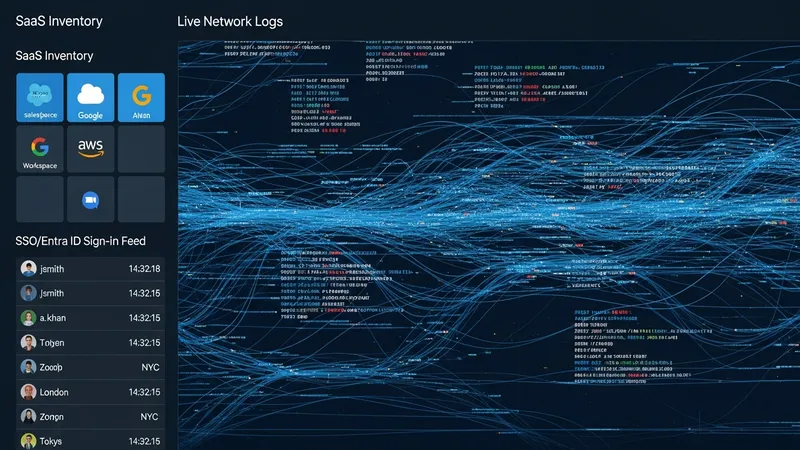
Configurations that commonly warrant attention include permission settings, sharing policies, and audit-log retention. Scanners can flag deviations from organizational baselines such as public data sharing or overly permissive API tokens. For each finding, tools may capture contextual metadata—who changed the setting, when, and from which IP—so that investigators can assess intent and impact. Many organizations treat historical configuration changes as part of the posture narrative, using change logs to determine whether a risky setting is an intentional exception or a drift that requires correction.
Connector coverage and update cadence are practical considerations when relying on automated assessments. Some SaaS vendors change API endpoints or introduce new settings that posture tools must adapt to in order to remain accurate. Organizations often evaluate how frequently a tool refreshes its connectors and whether it can scope scans to priority apps. Scanning cadence and coverage choices can influence the timeliness of findings: tighter cadence may surface issues sooner but also requires more operational handling of alerts.
Visibility data often feeds into dashboards and reporting that inform different stakeholders. Security operations teams may require near-real-time alerts for severe exposures, while governance or audit teams may need periodic summary reports that map controls to policies. Effective posture management systems therefore allow role-based views and exportable artifacts so that each audience receives relevant information. Clear labeling of data sources and confidence levels can help consumers interpret findings without over-relying on any single automated signal.
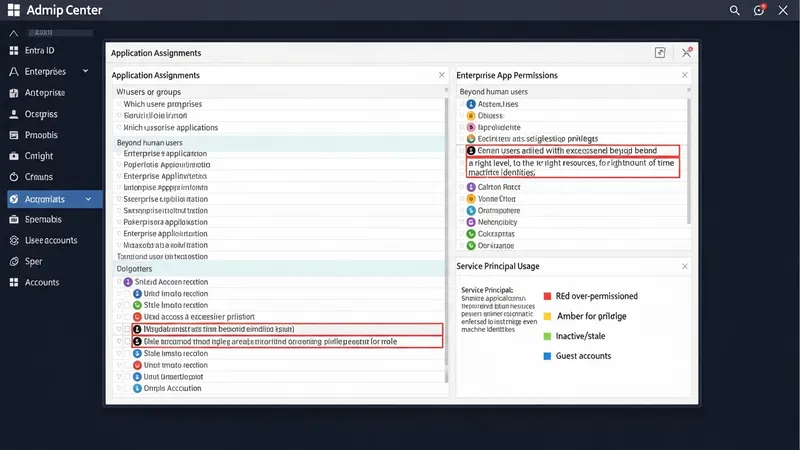
Identity and access controls represent a frequent focus within SaaS posture efforts because many exposures arise from excessive privileges or stale accounts. Typical features in this area include access reviews, entitlement inventories, and role change tracking. In Microsoft environments, Entra ID artifacts—such as application assignments, enterprise app permissions, and service principal usage—are frequently analyzed to identify over-permissioned principals. Organizations often pair automated detection of risky access with periodic human review to balance automation with contextual judgment when revoking or adjusting entitlements.
Access review workflows often include scoped review periods and attestations by application owners or business managers. Automated tools may recommend candidates for review—such as inactive users with high privileges or guests with broad access—but the final attestation is usually performed by an appointed reviewer. In practice, organizations commonly set review frequency based on sensitivity: higher-risk applications may be reviewed quarterly, while lower-risk services may follow an annual cadence. Documentation of decisions during reviews is valuable for compliance and for future risk assessments.
Service accounts and API credentials require separate consideration because they often bypass interactive controls. Posture tools may track service principal permissions, recent usage patterns, and whether credentials are near expiry. Rotating credentials and enforcing least privilege for service principals are considered risk-reducing practices, and posture tooling can surface instances where service accounts have broader access than operationally necessary. These observations are typically presented as findings requiring validation rather than definitive proof of compromise.
Guest and external collaboration settings are another recurring area for identity-focused posture checks. Defaults for sharing or guest access can expose data unintentionally if not tuned to organizational policy. Posture assessments may flag broad guest access, externally shared folders, or applications that allow anonymous links. Organizations often treat these flags as input to a remediation workflow that involves business owners and security teams to determine whether tightening access aligns with operational needs.
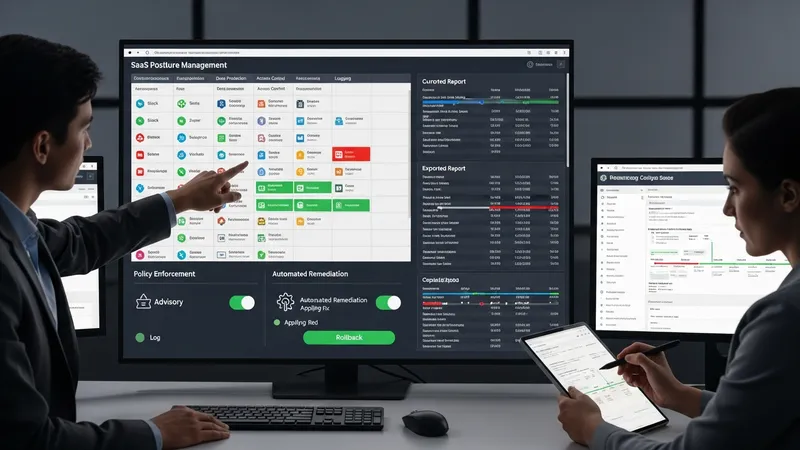
Mapping SaaS configuration states to compliance requirements is a common function of posture management. Tools may provide templates or frameworks that align findings with control sets such as data protection, access control, and logging requirements. In many environments, compliance teams use these mappings to gather evidence for audits by exporting reports that show current settings and historical changes. It is important to treat automated mappings as advisory: compliance determinations usually involve human review and consideration of compensating controls and business context.
Policy enforcement options range from advisory alerts to automated remediation, depending on organizational risk tolerance and technical capability. Advisory modes typically generate tickets or alerts for manual review, while automated enforcement may apply configured fixes such as disabling risky integrations or adjusting sharing settings. Organizations often pilot automated remediation for low-risk, high-frequency issues and reserve manual handling for complex or high-impact changes. Policy enforcement should be instrumented with logging and rollback plans to reduce operational surprises.
Retention and evidence collection are practical aspects of compliance monitoring. Adequate logging and retention windows help demonstrate the historical state of settings and user activity. SaaS posture tools often aggregate activity logs and configuration snapshots so auditors can trace the timeline of a finding. Retention choices are governed by internal policy and regulatory requirements; organizations frequently document their retention rationale and ensure that evidence exports are reproducible and tamper-evident where necessary for audit integrity.
Reporting and stakeholder alignment are essential to ensure compliance findings are actionable. Security teams, application owners, and compliance officers may require different report formats and frequencies. Posture tools that support role-based reporting and customizable dashboards can streamline communication across these groups. Regular review cycles that reconcile posture findings with policy exceptions help maintain alignment between operational realities and documented controls.

Risk detection in SaaS posture management combines static configuration checks with dynamic signals such as anomalous sign-ins or unusual data access. Correlating configuration findings with telemetry can change the priority of a finding: a permissive setting that has not been used may be less urgent than a similar setting tied to recent suspicious activity. In many programs, a small set of high-confidence indicators is used to reduce alert fatigue, and findings are triaged into categories that match available remediation resources and governance processes.
Remediation workflows vary by organization and by the type of finding. Simple misconfigurations may be automatically corrected or surfaced as remediation tasks in IT ticketing systems. More complex issues—such as entitlement redesign or cross-application integrations—may require multi-team coordination and approvals. Documenting remediation steps, dependencies, and decision rationale supports governance: it helps reviewers understand risk acceptance and provides a record for future posture reviews or audits.
Governance practices around SaaS posture management typically define roles, responsibilities, and escalation paths. A governance framework may specify who owns application risk, who approves configuration changes, and who signs off on exceptions. These role definitions can reduce turnaround time for remediation and clarify accountability. Governance processes may also address periodic reassessment, ensuring that posture measurements and policy mappings remain up to date as business use of SaaS evolves.
Operational considerations include measuring program effectiveness and iterating on controls. Common metrics include the number of high-priority findings over time, mean time to remediate, and coverage of critical applications. Programs often start with a small set of high-risk applications to validate processes before scaling. Continuous improvement cycles—driven by post-incident reviews and changing application landscapes—help keep posture efforts aligned with emerging threats and organizational priorities.
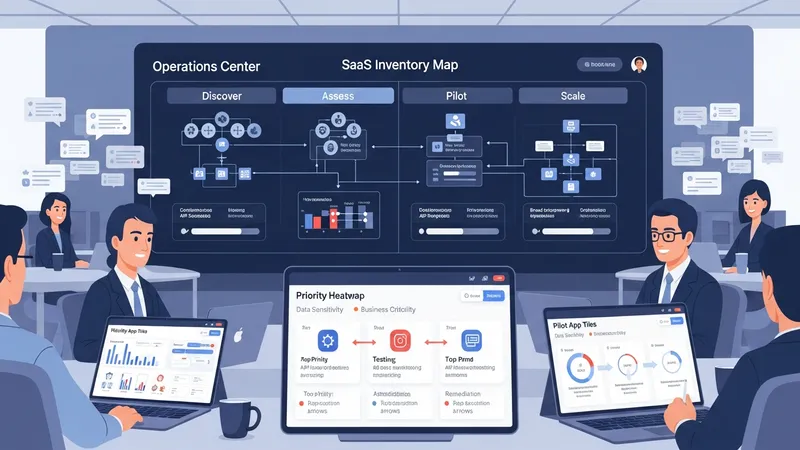
Implementing a SaaS posture program usually follows phased patterns: inventory and discovery, prioritized assessment, pilot remediation workflows, and scale. Initial inventories may reveal many SaaS instances, and teams often prioritize based on data sensitivity and business criticality. Pilot projects commonly focus on a handful of applications where API coverage is strong and owners are engaged. Lessons from pilots inform policies, connector configurations, and escalation templates to support broader adoption.
Operational planning should consider resource allocation for triage, remediation, and governance. Security teams may need to define SLAs for different finding severities and establish handoff procedures with application owners. Automated ticketing integrations can reduce manual work, but human review remains important for contextual decisions. Training and clear documentation for owners and reviewers help ensure that posture findings are interpreted consistently and that remediation actions match business needs.
Integrations with existing security tooling are practical facilitators of an effective posture program. Common integrations include SIEMs, ticketing systems, identity protection services, and configuration management databases. Linking posture findings into incident response workflows can help surface potential compromise scenarios earlier. When integrating, teams often evaluate data schema compatibility and ensure that identifiers (such as user IDs and object IDs) are consistently mapped across systems to support reliable correlation.
Scaling posture management involves continual reassessment of policies and measurement of program outcomes. Organizations often adopt iterative governance reviews that update baselines, refine scoring models, and expand connector coverage. Regularly scheduled program reviews—aligned with operational cycles such as major cloud migrations or application rollouts—help maintain relevance. Over time, mature programs balance automation with human oversight to keep pace with changing SaaS ecosystems and organizational priorities.