
Cloud environments require ongoing assessment of configuration, policy alignment, and access controls to reduce exposure from misconfigurations and inconsistent settings. The concept covered here refers to coordinated tools and processes that scan cloud accounts, compare settings against defined policies, and present findings so teams can prioritize remediation. Such systems often integrate with identity and access management, logging, and infrastructure provisioning to provide continuous visibility rather than a single snapshot.
These capabilities typically include automated scans for insecure defaults, mapping of resources to compliance frameworks, aggregation of alerts from multiple cloud services, and mechanisms to enforce or recommend corrective actions. The approach may combine vendor-native controls, configuration-as-code verification, and external assessment engines to produce dashboards, reports, and policy-as-code templates that reflect an organisation’s risk tolerance and regulatory needs.

Comparing these example approaches shows different strengths and trade-offs. Native provider controls can offer deep, service-specific checks and immediate access to provider telemetry, but may be limited to a single cloud. Third-party platforms typically normalise data across multiple providers and may provide standardised compliance mappings; they can require integration effort and careful credential management. IaC scanning often shifts detection earlier in the development lifecycle and may reduce downstream findings, while it relies on coverage of template types and integration into CI/CD pipelines. Organisations commonly combine methods to cover gaps.
Policy frameworks and compliance mapping are central to practical posture management. Many teams map checks to recognised standards or internal policies to prioritise findings by business impact. Templates and policy-as-code approaches may be used to convert regulatory or organisational requirements into repeatable rules. This often helps with audit readiness because findings are traceable to specific checks and timestamps. Policy design typically balances prevention, detection, and explainability so that operators can interpret alerts and decide on corrective actions.
Visibility and data sources play an important role in accuracy. Effective posture assessment may pull from configuration state, audit logs, identity metadata, and network settings to reduce false positives. Correlating evidence—such as linking a publicly exposed storage resource to recent ACL changes—can often clarify risk and urgency. Data retention and historical tracking may also help identify drift patterns over time and support investigations into when and how a configuration diverged from policy.
Operational workflows and governance affect how findings are addressed. Organizations often define severity levels, ownership rules, and timelines that guide remediation or mitigation. Automated remediation capabilities may be applied in lower-risk scenarios, while higher-risk findings typically route through change control or security review. Establishing clear responsibilities and integrating posture findings into existing incident, change, and compliance processes can support consistent treatment of recurring issues.
In summary, the subject combines automated assessment, policy mapping, visibility, and governance to manage cloud configuration risk over time. The examples above illustrate common elements—native controls, third-party aggregators, and IaC scanning—that may be combined to form a layered approach. Each element can influence detection timing, coverage, and operational effort. The next sections examine practical components and considerations in more detail.
Assessing cloud configuration typically begins with inventorying resources and mapping their settings against chosen policies. Scans may run continuously or on a schedule and often examine access controls, encryption settings, network exposure, and logging configuration. Detection logic usually compares live state and drift against intended state models or baseline templates, and may flag deviations such as public access where encryption is expected. When designing assessment cadence, teams often trade off scanning frequency with API rate limits and cost considerations.
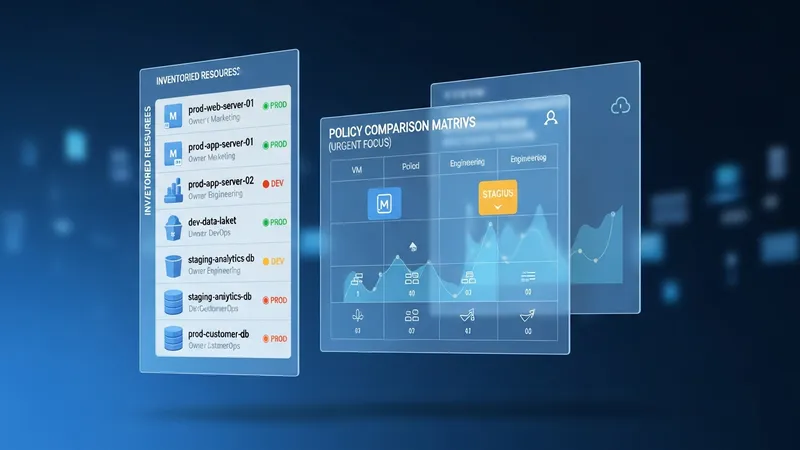
Misconfiguration detection may generate numerous findings, so contextualisation is important. Grouping findings by resource owner, environment, or compliance domain can help prioritise. Correlating configuration findings with identity information and recent administrative actions often clarifies whether a change was intentional. Tooling that includes risk scoring or severity tiers can assist teams in triaging, though scoring methodologies typically vary and should be scrutinised for alignment with organisational risk models.
False positives are a common operational concern and may be reduced by refining checks, adding allowlists for approved exceptions, or incorporating environment tags into evaluation rules. Some organisations maintain an exceptions registry and periodic review process to recalibrate policies. It is often useful to capture contextual metadata—such as deployment pipeline identifiers or change request references—so that findings link back to an accountable process and can be resolved within existing operational workflows.
Integration points for assessment results commonly include ticketing systems, SIEMs, and configuration management databases. Exporting normalized findings enables downstream analysis and trend detection. For development teams, early detection via IaC scanning and pre-deployment gating often reduces the volume of runtime findings. These practices typically form part of a defence-in-depth posture, where detection complements preventive controls and governance mechanisms.
Compliance monitoring translates legal, regulatory, or organisational requirements into measurable checks that can be automated. Teams often map controls to frameworks that are relevant to their sector and geography, then implement those mappings as policy rules. Monitoring may include continuous checks for required logging, encryption, access review cadence, and evidence of configuration hardening. Reporting frequently exports standardised artefacts to support audits and to demonstrate alignment to reviewers.

Policy mapping can use policy-as-code constructs to keep rules version controlled and auditable. This approach typically enables repeatable enforcement and helps coordinate policy updates with changes to technical controls. It may also allow automated testing of policy changes in staging environments before applying them in production. Organisations often maintain a catalogue of policies that includes rationale, expected behaviour, and acceptable exceptions to support consistent application.
Automated compliance monitoring often surfaces exceptions that require business context or compensating controls. Governance processes commonly define the criteria for granting or renewing exceptions, and periodic review schedules ensure exceptions do not become permanent exposures. Where audits require evidence, timestamped records of checks, remediation steps taken, and owner assignments typically form part of the documentation provided to auditors.
When selecting which frameworks to map, teams sometimes prioritise those that align with contractual obligations or industry practice. Mapping decisions may also consider maturity of cloud controls and the degree to which automated checks can provide verifiable evidence. This pragmatic mapping helps ensure monitoring efforts focus on controls that are both material to risk and practically measurable with available tooling.
Automated remediation can reduce mean time to corrective action for straightforward issues, such as reapplying secure configuration templates or rotating misconfigured permissions. Such automation typically operates within defined guardrails and often requires escalation flows for higher-risk changes. Organisations frequently separate automated actions into low-risk, repeatable fixes and higher-risk activities that must pass manual review or change control processes to maintain stability and compliance.

Workflows commonly integrate assessment results with ticketing, change management, and notification channels so that issues are routed to the correct owner with context. Assigning ownership and tracking remediation progress helps maintain accountability. Many teams set up measurable SLAs for addressing severity tiers; these SLAs usually reflect business priorities and risk appetite, and are periodically reviewed to ensure they remain appropriate as environments evolve.
Governance practices affect how automated remediation is approved and maintained. Policy versioning, testing in pre-production, and rollback procedures are typical controls to prevent unintended disruptions. Periodic validation of automation logic is often recommended so that remediations remain effective as cloud provider features and APIs change. Documentation and clear escalation paths also support coordinated response when automated actions interact with other operational processes.
Consideration of change impact and coordination with development teams is often important. Where remediation may affect availability or performance, planners frequently schedule actions during maintenance windows or require confirmations. Communication practices and shared runbooks between security and platform teams typically reduce friction and enable safer application of automated fixes while preserving operational continuity.
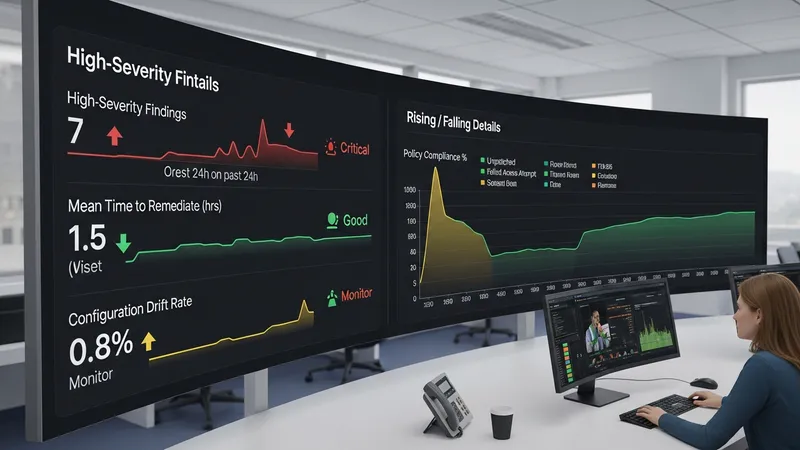
Visibility into posture relies on coherent metrics that reflect both current state and trends. Common metrics include number of high-severity findings, mean time to remediate, percentage of resources in compliance with critical policies, and rate of configuration drift. Tracking these metrics over time helps identify recurring issues and the effectiveness of remediation processes. Data visualisations can make trends clearer, but metric selection generally aligns with organisational risk priorities to avoid noisy or irrelevant indicators.
Continuous improvement cycles use findings and metrics to refine policies, scanning coverage, and operational workflows. Retrospective analysis of incidents and recurring misconfigurations often reveals gaps in developer training, IaC templates, or default provisioning scripts. Addressing root causes—rather than only treating symptoms—may reduce recurrence and improve overall posture. Iterative reviews of policy coverage and scan rules are standard practice in maturing programmes.
Insider considerations include credential management for scanning tools, API rate limits, and the potential for scan-induced costs. Credential scope should follow least-privilege principles to reduce blast radius, and scanning schedules may be tuned to balance timeliness with provider limits and cost. Recording test outcomes and storing evidence in secure, access-controlled locations supports both operational review and audit needs without creating unnecessary exposure.
Finally, cross-functional collaboration among security, platform, and application teams often strengthens posture outcomes. Shared ownership models, regular governance meetings, and accessible findings help integrate posture management into normal engineering cycles. This collaborative approach typically supports more sustainable remediation practices and better alignment between security objectives and operational realities.